

Why Alcohol Detox Needs Medical Supervision
Alcohol detox is not just about getting through a few uncomfortable days without drinking. For many people, alcohol withdrawal can quickly become medically complicated, especially after long-term or heavy alcohol use. Medical supervision matters because alcohol affects multiple body systems, including the brain’s chemical signaling, hydration balance, blood pressure regulation, and heart rhythm. When alcohol is removed abruptly, the body can rebound in ways that are unpredictable without clinical monitoring.
At Refresh Recovery & Wellness Centers in Norwell, Massachusetts (02061), we often meet people who tried to stop drinking at home and were surprised by how intense symptoms became. Alcohol withdrawal can progress from mild anxiety and tremors to seizures or delirium tremens in a short window. Supervised detox gives you access to trained clinicians who can evaluate your risk level, respond to escalating symptoms, and coordinate medications and supportive care when needed.
Medical detox also improves comfort and reduces the chance of relapse early in recovery. When withdrawal symptoms are poorly managed, people are more likely to drink again to relieve distress, which can reinforce dependence and increase health risks. A structured detox plan replaces that cycle with evidence-based stabilization and a clear transition into ongoing treatment, which is where lasting recovery is built.
Key reasons medical supervision is recommended for alcohol detox include:
- Withdrawal can escalate quickly even if symptoms start mild
- Seizures and delirium tremens can be life-threatening without treatment
- Clinical monitoring supports safer sleep, hydration, and vital sign stability
- Medications can reduce risk and improve comfort
- Supervision helps you transition smoothly into rehab and therapy
Common Withdrawal Symptoms and When They Escalate

Alcohol withdrawal symptoms exist on a spectrum. Some people experience what feels like a severe hangover with anxiety, nausea, and trouble sleeping, while others develop serious neurological or cardiovascular complications. Symptoms often begin within 6–12 hours after the last drink, but timing can vary depending on drinking history, overall health, and whether other substances are involved.
Early symptoms often include shakiness, sweating, agitation, headache, and a racing heart. Many people also feel emotionally raw, with intense fear or irritability that can be confusing or embarrassing. This emotional component is common because alcohol suppresses the nervous system; when it is removed, the brain may become overactive as it tries to regain balance.
Escalation tends to happen in waves. Symptoms may intensify around 24–72 hours after the last drink, particularly for those with a history of daily heavy drinking or prior complicated withdrawal. Hallucinations, severe confusion, and unstable vital signs are red flags that withdrawal is moving from uncomfortable to dangerous.
Common symptoms and escalation warning signs include:
- Mild to moderate: tremors, nausea, sweating, insomnia, anxiety
- Neurological escalation: confusion, hallucinations, agitation that feels “out of control”
- Autonomic instability: fever, very high blood pressure, rapid heart rate
- Functional decline: inability to keep fluids down, inability to sleep for multiple nights
- Risk markers: prior withdrawal seizures, prior delirium tremens, older age, medical illness
Delirium Tremens: The Most Dangerous Complication
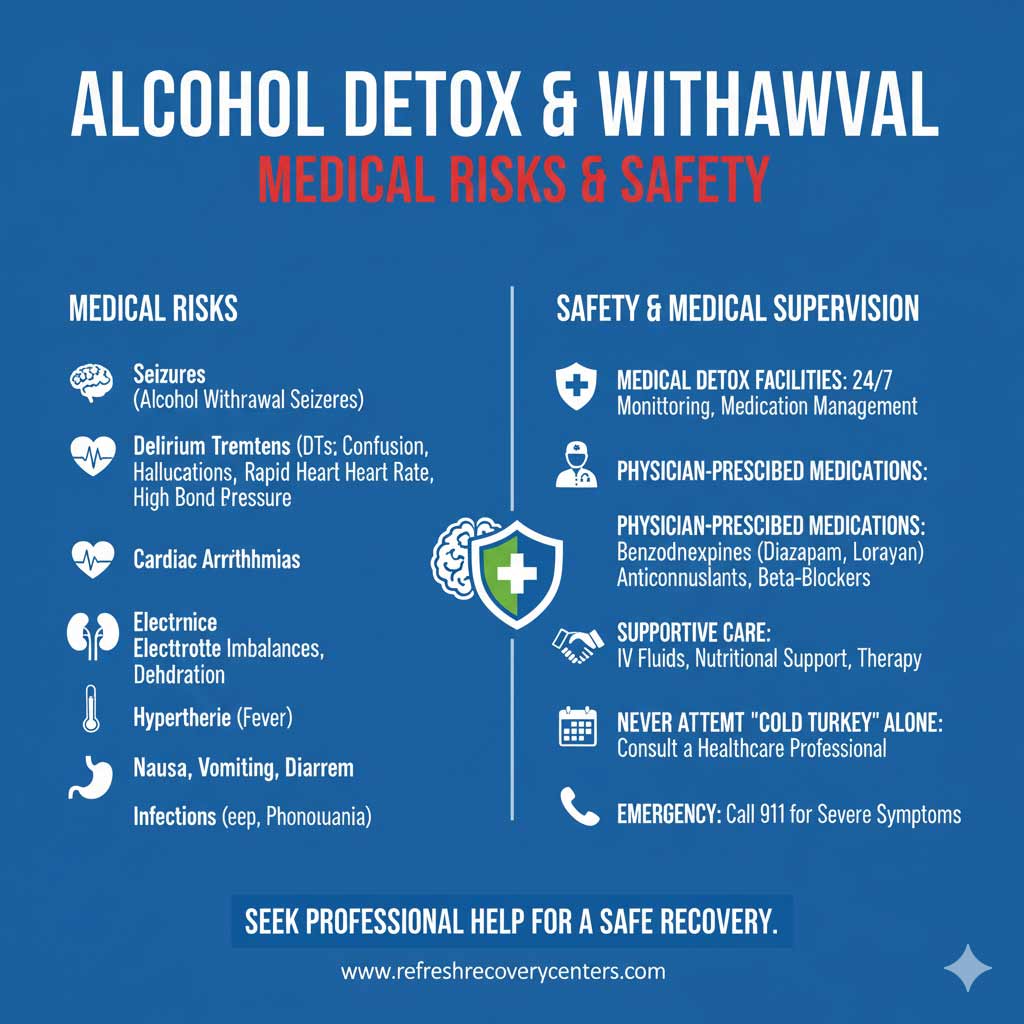
Delirium tremens, often called DTs, is the most feared complication of alcohol withdrawal because it can be fatal without prompt medical care. DTs typically involves severe confusion, disorientation, agitation, hallucinations, and unstable vital signs. It is not the same as “the shakes.” DTs is a medical emergency, and the safest response is immediate evaluation in a medically staffed setting.
DTs most often develops 48–96 hours after the last drink, but it can appear earlier or later depending on a person’s physiology and alcohol history. It is more common among people who have been drinking heavily for years, have had prior episodes of withdrawal, or have co-occurring medical issues. The risk also increases when there is poor nutrition, dehydration, or liver impairment, all of which are common in severe alcohol use disorder.
What makes DTs dangerous is the combination of neurological disturbance and body-wide stress. Heart rate and blood pressure may spike, body temperature can rise, and the person may become severely dehydrated or unable to communicate clearly. Without rapid stabilization, complications can include arrhythmias, aspiration, injuries, and in severe cases, death.
Signs that may indicate delirium tremens or impending DTs include:
- Severe confusion, disorientation, or inability to recognize surroundings
- Visual, tactile, or auditory hallucinations
- Significant tremors with agitation that is escalating, not improving
- Fever, profuse sweating, very high heart rate or blood pressure
- History of DTs or seizures during past attempts to quit drinking
Seizure Risk, Dehydration, and Heart Concerns
Alcohol withdrawal seizures can occur suddenly, sometimes without many warning symptoms. They are most likely within 6–48 hours after the last drink, though the timeline can vary. A seizure is not only dangerous in itself but can signal that withdrawal is severe and may progress to delirium tremens. People who have had a withdrawal seizure in the past are at higher risk for future seizures when stopping alcohol again.
Dehydration is another underestimated medical risk. Alcohol can suppress antidiuretic hormone, increase urination, disrupt electrolytes, and contribute to vomiting and sweating during withdrawal. Dehydration can worsen headaches, confusion, and heart strain. Electrolyte imbalances, such as low magnesium or potassium, can further increase the likelihood of arrhythmias and seizures.
The cardiovascular system often takes a hit during withdrawal. It is common to see elevated blood pressure and rapid heart rate as the nervous system becomes overactivated. For people with underlying heart disease, untreated hypertension, or a history of arrhythmias, withdrawal can put serious stress on the heart. That is why monitoring vitals and correcting fluids and electrolytes is not “extra,” it is central to safety.
Medical risks clinicians often monitor during alcohol detox include:
- Seizures, especially in the first 2 days
- Dehydration from vomiting, sweating, and low fluid intake
- Electrolyte imbalance that can affect heart rhythm and cognition
- High blood pressure and tachycardia that may require medication support
- Sleep deprivation and agitation that increase relapse and injury risk
Who Needs Inpatient Detox vs. Outpatient Support?

Not everyone needs the same level of detox care. Some individuals can safely detox with outpatient medical support and daily monitoring, while others need inpatient detox with 24/7 clinical oversight. The deciding factors usually include drinking history, prior withdrawal severity, current medical status, mental health stability, and the safety of the home environment. Choosing the right level is a safety decision, not a willpower decision.
Inpatient detox is often appropriate when there is a history of severe withdrawal symptoms, seizures, delirium tremens, or significant medical issues such as liver disease, heart problems, uncontrolled hypertension, or pregnancy. It may also be recommended if someone is using multiple substances, including benzodiazepines or opioids, because withdrawal can interact and become more complex. If a person cannot reliably attend daily check-ins or does not have stable support at home, inpatient detox can provide a safer container.
Outpatient detox may be possible when withdrawal risk is assessed as low to moderate and the person has reliable transportation, supportive family or friends, and the ability to follow a medical plan. Even then, outpatient detox should still involve medical oversight, clear symptom monitoring, and a plan for escalation to a higher level of care if needed.
Situations that often point toward inpatient detox include:
- Prior withdrawal seizure, delirium tremens, or severe hallucinations
- Heavy daily drinking over months or years
- Serious medical conditions or unstable vital signs
- Active suicidal thoughts or severe psychiatric instability
- Lack of a safe, supportive home environment for monitoring
Co-Occurring Disorders: Depression, Anxiety, Trauma
Alcohol use disorder frequently overlaps with depression, anxiety, trauma-related symptoms, and other mental health conditions. Sometimes alcohol is used to cope with panic, insomnia, grief, or painful memories. Other times, heavy drinking contributes to mood dysregulation over time, changing sleep patterns and brain chemistry in ways that deepen depression and anxiety. Either way, detox can temporarily intensify mental health symptoms, which is why planning needs to include psychological safety, not only physical stabilization.
During early sobriety, many people experience rebound anxiety, irritability, intrusive thoughts, or emotional numbness. It can be unsettling to feel emotions that were previously muted by alcohol. Trauma survivors may notice increased hypervigilance or nightmares when they stop drinking. People with depression may feel hopeless during withdrawal, especially if alcohol was their main coping tool.
Dual diagnosis care means treating substance use and mental health together, with a coordinated plan. At Refresh Recovery & Wellness Centers in Norwell, Massachusetts, our programming is designed to address both, using evidence-based therapies and supportive holistic practices. The goal is not only to stop drinking, but to help you build emotional regulation skills and long-term stability.
Common co-occurring concerns addressed in treatment planning include:
- Depression, including low motivation and suicidal ideation risk screening
- Anxiety disorders, panic symptoms, and social anxiety
- Trauma and PTSD symptoms such as flashbacks and sleep disruption
- ADHD or mood disorders that can complicate early recovery
- Family stress, shame, and relationship conflict that fuel relapse cycles
Medications Used to Reduce Withdrawal and Cravings
Medication can play an essential role in safer alcohol withdrawal and in preventing relapse afterward. In medical detox settings, benzodiazepines are commonly used to reduce seizure risk and calm the overactive nervous system. Clinicians may also use anticonvulsants in certain cases, along with vitamins and electrolytes to correct deficiencies that can affect the brain and body. Thiamine is especially important because long-term alcohol use can cause deficiencies that raise the risk of serious neurological problems.
After detox, some people benefit from medications that reduce cravings or make drinking less reinforcing. Naltrexone can help reduce the rewarding effects of alcohol and decrease cravings for some individuals. Acamprosate may support brain stabilization and reduce protracted withdrawal symptoms like insomnia and restlessness. Disulfiram is another option that creates an unpleasant reaction if alcohol is consumed, though it requires careful selection and adherence.
Medication decisions should be individualized and coordinated with medical and mental health history. A person’s liver function, other prescriptions, pregnancy status, and co-occurring disorders all matter. The goal is not to “medicate recovery,” but to remove barriers so therapy and lifestyle change have a real chance to work.
Medication support may include:
- Withdrawal stabilization: benzodiazepines, symptom-targeted meds, seizure prevention
- Nutritional support: thiamine, folate, magnesium, hydration and electrolytes
- Craving reduction: naltrexone or acamprosate when appropriate
- Co-occurring symptoms: non-addictive options for sleep or anxiety as clinically indicated
- Ongoing monitoring: medication adherence, side effects, and relapse prevention planning
Safe Detox Planning When Detox Isn’t On-Site
Refresh Recovery & Wellness Centers provides upscale, personalized addiction treatment in Norwell, Massachusetts, but we do not offer on-site medical detox. That transparency is important because detox is a distinct clinical service that requires specific medical staffing and monitoring capabilities. The good news is that you do not have to figure it out alone. Safe detox planning means coordinating the right detox placement first, then creating a smooth handoff into structured treatment afterward.
When detox is not on-site, the transition is where many people lose momentum. Someone may complete detox and then go home without a plan, which increases relapse risk. Coordinated placement aims to prevent that by arranging admissions, aligning clinical recommendations, and preparing a step-down plan into PHP or IOP once medically stable. This continuity matters because detox addresses acute stabilization, but it does not resolve the underlying drivers of alcohol use.
A safe plan also includes practical details. Transportation, family communication, time off work, and medication continuity should be organized in advance. If you are coming from nearby communities such as Quincy, Weymouth, Hingham, or other South Shore areas, coordinated planning can reduce last-minute stress and help you feel supported from the first call onward.
Elements of safe detox planning often include:
- A clinical screening to match you to the right detox level of care
- Coordination of admission timing and any needed medical records
- A plan for medications and follow-up appointments after detox
- A scheduled start date for PHP, IOP, or outpatient therapy after discharge
- Relapse prevention steps for the first week after detox, when risk is high
Finding a Luxury Detox in Massachusetts With Help

Many people want detox that feels calm, private, and clinically competent. A luxury detox experience typically emphasizes comfort, discretion, and an environment that supports rest while still providing medical monitoring. However, “luxury” should never replace safety. The most important factor is medical capability: the facility must be able to assess withdrawal severity, monitor vitals, treat complications, and arrange higher-level medical care if needed.
Refresh Recovery & Wellness Centers can help you find a luxury detox in Massachusetts that matches your clinical needs, preferences, and insurance situation. Placement is especially helpful if you are unsure how risky your withdrawal might be, have had previous difficult attempts to quit, or need dual diagnosis-aware care from the start. The goal is to identify an option that is both comfortable and medically appropriate, then coordinate a direct step-down into treatment in Norwell once detox is complete.
When evaluating detox options, it is reasonable to ask detailed questions. What is the staff-to-client ratio? Is there 24/7 nursing and medical provider coverage? How are withdrawal scales used? How do they handle co-occurring psychiatric symptoms? These are not “extra” questions, they are how you protect your safety and your recovery timeline.
What to look for when selecting a luxury detox option:
- 24/7 medical monitoring with clear protocols for alcohol withdrawal
- Experience treating high-risk withdrawal, including seizure prevention
- Ability to manage dual diagnosis needs and psychiatric stabilization
- Comfortable setting that supports sleep, nutrition, and privacy
- A strong discharge plan into PHP, IOP, or outpatient care, not a gap in services
What to Expect After Detox: Next Steps in Treatment
Detox is the start, not the finish. Once the body is medically stabilized, the real work becomes learning how to live without alcohol and building skills for long-term safety. Many people feel clearer after detox but also emotionally exposed, especially if alcohol was used to manage stress, trauma symptoms, or social anxiety. This is why stepping into structured treatment quickly is one of the strongest predictors of sustained recovery.
After detox, a clinician may recommend a partial hospitalization program (PHP), an intensive outpatient program (IOP), or standard outpatient therapy depending on your needs, schedule, and risk factors. Refresh Recovery & Wellness Centers offers full-day and half-day programming designed to provide meaningful clinical intensity while still supporting reintegration into everyday life. Treatment planning is personalized, which is especially important for professionals, parents, and individuals who value discretion.
Many clients also choose an optional, recovery-supportive living environment during treatment in Massachusetts. Supportive housing can provide structure, peer accountability, and separation from triggers while you build routines and coping skills. It is not limited to one level of care, and it can be considered alongside your clinical schedule and safety needs.
After detox, next steps often include:
- A clinical assessment to determine PHP, IOP, or outpatient needs
- A relapse prevention plan for cravings, stress, and social situations
- Dual diagnosis support for mood, anxiety, or trauma symptoms
- Family involvement or couples support when appropriate
- Ongoing recovery structure such as supportive housing, peer support, and aftercare
Evidence-Based Therapy After Detox: CBT, DBT, MI
Evidence-based therapy provides tools that work in real life, especially when motivation fluctuates or stress spikes. Cognitive behavioral therapy (CBT) helps people identify the thought patterns and behavioral loops that keep drinking going, such as catastrophizing, self-criticism, or “all-or-nothing” thinking. CBT also focuses on practical skills like trigger management, problem-solving, and scheduling healthy routines.
Dialectical behavior therapy (DBT) is especially helpful when alcohol use is tied to emotional intensity, impulsivity, or difficulty tolerating distress. DBT skills like mindfulness, distress tolerance, and interpersonal effectiveness can reduce relapse risk by giving you alternatives when emotions feel overwhelming. Motivational interviewing (MI) supports change by helping you explore ambivalence without shame, strengthening your own reasons for sobriety.
Refresh Recovery & Wellness Centers integrates these approaches into full-day and half-day treatment options in Norwell, Massachusetts, with individualized planning for dual diagnosis needs. Therapy is often most effective when it is paired with consistent recovery structure, medication support when appropriate, and holistic practices that help regulate the nervous system.
Core evidence-based therapy elements often include:
- CBT for triggers, cravings, and relapse prevention skills
- DBT for emotional regulation, distress tolerance, and relationship stability
- Motivational interviewing to strengthen commitment and resolve ambivalence
- Psychoeducation about addiction, withdrawal, and the brain-body stress response
- Skills practice with real-world planning for weekends, work stress, and family dynamics
Building Long-Term Safety With Mindfulness and Yoga
Long-term recovery is not only about resisting alcohol. It is about building a life where alcohol is no longer needed to cope. Mindfulness and yoga can support this by helping regulate the nervous system, improve sleep, and increase tolerance for discomfort without reacting impulsively. These practices are especially useful during post-acute withdrawal, when mood swings, irritability, and restlessness can linger.
Mindfulness teaches you to notice cravings and emotions without immediately obeying them. That skill is powerful because cravings rise and fall like waves. Yoga adds a physical dimension, helping people reconnect with their bodies after long periods of numbing, stress, or self-neglect. It can also improve breathing patterns and reduce muscular tension, which often spikes in early sobriety.
At Refresh Recovery & Wellness Centers, holistic modalities like yoga and mindfulness complement evidence-based clinical care. They are not a replacement for medical treatment or therapy, but they can strengthen recovery by improving emotional regulation and helping clients practice self-care in a structured, supportive setting. For many people, these tools become part of a sustainable routine long after formal programming ends.
Holistic practices that support long-term safety may include:
- Mindfulness skills for cravings, anxiety, and emotional awareness
- Yoga for stress reduction, sleep support, and nervous system regulation
- Breathwork to reduce panic sensations and improve grounding
- Body-based coping strategies for trauma-related hyperarousal
- Routine-building to support consistency, energy, and relapse prevention
Frequently Asked Questions
How do I know if I need medical alcohol detox instead of quitting at home?
If you have been drinking heavily, have had withdrawal symptoms before, or have any history of seizures, hallucinations, or delirium tremens, quitting at home can be unsafe. Medical detox provides monitoring, medication support when needed, and a plan if symptoms escalate. Refresh Recovery & Wellness Centers in Norwell Massachusetts can help you assess risk and coordinate an appropriate detox placement in Massachusetts before you begin ongoing treatment.
What is the difference between detox, PHP, and IOP for alcohol addiction treatment?
Detox focuses on medical stabilization and withdrawal safety, usually over several days, and it does not address the deeper behavioral and mental health patterns that sustain addiction. PHP is a structured, higher-intensity day program, while IOP offers fewer hours per week with continued therapy and skills work. Refresh Recovery & Wellness Centers in Norwell Massachusetts offers full-day and half-day programs that can function as a step-down after detox, supporting relapse prevention and dual diagnosis care.
Can alcohol withdrawal cause seizures even if I feel “mostly fine”?
Yes. Withdrawal seizures can occur suddenly, especially within the first 6 to 48 hours after the last drink, and sometimes before a person realizes withdrawal is becoming severe. Risk is higher with heavy daily use, prior complicated withdrawal, electrolyte imbalance, or co-occurring substance use. Refresh Recovery & Wellness Centers in Norwell Massachusetts can help you plan a medically supervised detox if there are any red flags, then transition into therapy-focused care.
Do you treat depression and anxiety along with alcohol use disorder?
Yes, treating both together is often essential for lasting recovery because mood and anxiety symptoms can trigger relapse if they are not addressed. Refresh Recovery & Wellness Centers in Norwell Massachusetts specializes in dual diagnosis care, integrating evidence-based therapy approaches like CBT, DBT, and motivational interviewing. Treatment plans are personalized to support emotional regulation, coping skills, and ongoing mental health stability after detox.
Does Refresh Recovery & Wellness Centers provide detox on-site?
No. Refresh Recovery & Wellness Centers does not provide on-site medical detox, and we are transparent about that because alcohol withdrawal can involve serious medical risks. We can help you find and access a luxury detox in Massachusetts that matches your clinical needs, preferences, and insurance considerations. After detox, we help you transition into structured treatment in Norwell Massachusetts so you do not lose momentum.
Can I use private insurance for PHP or IOP in Massachusetts?
Many private insurance plans may cover PHP and IOP when services are medically necessary, but coverage varies by plan, provider network, and clinical documentation requirements. Refresh Recovery & Wellness Centers in Norwell Massachusetts accepts a broad range of insurance and can help verify benefits and discuss options. A clear clinical assessment and coordinated care plan often help streamline authorization and reduce surprises.
What happens after I finish detox and start treatment?
After detox, you can expect an assessment to determine the most appropriate level of care, such as PHP, IOP, or outpatient therapy, along with a relapse prevention plan. Treatment typically includes evidence-based therapy, skills practice, and support for co-occurring mental health needs. Refresh Recovery & Wellness Centers in Norwell Massachusetts provides full-day and half-day programming and can discuss optional supportive housing in Massachusetts as a recovery-supportive environment during treatment.
Is supportive housing required to attend treatment?
Supportive housing is optional, not required, and it can be helpful for people who want added structure, accountability, and distance from triggers while they engage in treatment. Some people prefer to live at home and attend programming, while others benefit from a more recovery-centered environment. Refresh Recovery & Wellness Centers in Norwell Massachusetts can discuss whether supportive housing in Massachusetts makes sense for your goals, safety needs, and schedule.
{
“@context”: “https://schema.org”,
“@type”: “FAQPage”,
“mainEntity”: [
{
“@type”: “Question”,
“name”: “How do I know if I need medical alcohol detox instead of quitting at home?”,
“acceptedAnswer”: {
“@type”: “Answer”,
“text”: “If you have been drinking heavily, have had withdrawal symptoms before, or have any history of seizures, hallucinations, or delirium tremens, quitting at home can be unsafe. Medical detox provides monitoring, medication support when needed, and a plan if symptoms escalate. Refresh Recovery & Wellness Centers in Norwell Massachusetts can help you assess risk and coordinate an appropriate detox placement in Massachusetts before you begin ongoing treatment.”
}
},
{
“@type”: “Question”,
“name”: “What is the difference between detox, PHP, and IOP for alcohol addiction treatment?”,
“acceptedAnswer”: {
“@type”: “Answer”,
“text”: “Detox focuses on medical stabilization and withdrawal safety, usually over several days, and it does not address the deeper behavioral and mental health patterns that sustain addiction. PHP is a structured, higher-intensity day program, while IOP offers fewer hours per week with continued therapy and skills work. Refresh Recovery & Wellness Centers in Norwell Massachusetts offers full-day and half-day programs that can function as a step-down after detox, supporting relapse prevention and dual diagnosis care.”
}
},
{
“@type”: “Question”,
“name”: “Can alcohol withdrawal cause seizures even if I feel ‘mostly fine’?”,
“acceptedAnswer”: {
“@type”: “Answer”,
“text”: “Yes. Withdrawal seizures can occur suddenly, especially within the first 6 to 48 hours after the last drink, and sometimes before a person realizes withdrawal is becoming severe. Risk is higher with heavy daily use, prior complicated withdrawal, electrolyte imbalance, or co-occurring substance use. Refresh Recovery & Wellness Centers in Norwell Massachusetts can help you plan a medically supervised detox if there are any red flags, then transition into therapy-focused care.”
}
},
{
“@type”: “Question”,
“name”: “Do you treat depression and anxiety along with alcohol use disorder?”,
“acceptedAnswer”: {
“@type”: “Answer”,
“text”: “Yes, treating both together is often essential for lasting recovery because mood and anxiety symptoms can trigger relapse if they are not addressed. Refresh Recovery & Wellness Centers in Norwell Massachusetts specializes in dual diagnosis care, integrating evidence-based therapy approaches like CBT, DBT, and motivational interviewing. Treatment plans are personalized to support emotional regulation, coping skills, and ongoing mental health stability after detox.”
}
},
{
“@type”: “Question”,
“name”: “Does Refresh Recovery & Wellness Centers provide detox on-site?”,
“acceptedAnswer”: {
“@type”: “Answer”,
“text”: “No. Refresh Recovery & Wellness Centers does not provide on-site medical detox, and we are transparent about that because alcohol withdrawal can involve serious medical risks. We can help you find and access a luxury detox in Massachusetts that matches your clinical needs, preferences, and insurance considerations. After detox, we help you transition into structured treatment in Norwell Massachusetts so you do not lose momentum.”
}
},
{
“@type”: “Question”,
“name”: “Can I use private insurance for PHP or IOP in Massachusetts?”,
“acceptedAnswer”: {
“@type”: “Answer”,
“text”: “Many private insurance plans may cover PHP and IOP when services are medically necessary, but coverage varies by plan, provider network, and clinical documentation requirements. Refresh Recovery & Wellness Centers in Norwell Massachusetts accepts a broad range of insurance and can help verify benefits and discuss options. A clear clinical assessment and coordinated care plan often help streamline authorization and reduce surprises.”
}
},
{
“@type”: “Question”,
“name”: “What happens after I finish detox and start treatment?”,
“acceptedAnswer”: {
“@type”: “Answer”,
“text”: “After detox, you can expect an assessment to determine the most appropriate level of care, such as PHP, IOP, or outpatient therapy, along with a relapse prevention plan. Treatment typically includes evidence-based therapy, skills practice, and support for co-occurring mental health needs. Refresh Recovery & Wellness Centers in Norwell Massachusetts provides full-day and half-day programming and can discuss optional supportive housing in Massachusetts as a recovery-supportive environment during treatment.”
}
},
{
“@type”: “Question”,
“name”: “Is supportive housing required to attend treatment?”,
“acceptedAnswer”: {
“@type”: “Answer”,
“text”: “Supportive housing is optional, not required, and it can be helpful for people who want added structure, accountability, and distance from triggers while they engage in treatment. Some people prefer to live at home and attend programming, while others benefit from a more recovery-centered environment. Refresh Recovery & Wellness Centers in Norwell Massachusetts can discuss whether supportive housing in Massachusetts makes sense for your goals, safety needs, and schedule.”
}
}
]
}